





















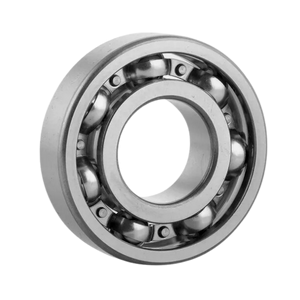
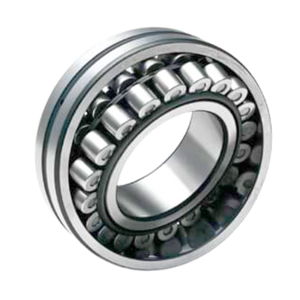
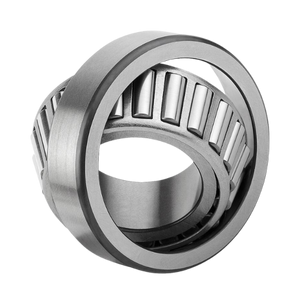
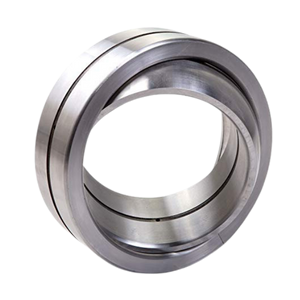







Did the bearing really fail — or is the problem in the system?
In industry, failures are often explained very simply: “the bearing failed.” It is a clear and convenient diagnosis because it points directly to the visible problem. But in practice, that explanation rarely tells the whole story.
In many cases, a bearing failure is not the root cause. It is simply the first visible sign that the system is operating under unfavorable conditions. In other words, a bearing often fails not because it is defective or low-quality, but because it becomes the weakest point in a system that is already under stress.
That is why, when investigating recurring failures, Hidrobalt specialists do not focus on a single part alone. They assess the entire assembly, its operating conditions, and the environment in which it works.
A bearing often reveals the problem, but does not create it
A bearing is one of the most critical components in any mechanical assembly, but it is also one of the most sensitive. It responds directly to load, vibration, temperature, lubrication quality, contamination, and sealing performance. For that reason, it is often the first part to show that something in the system is no longer working as it should.
The underlying cause may be excessive or uneven loads, insufficient or incorrectly selected lubrication, or the presence of dust, moisture, and other contaminants. Sealing failures are equally important, as they gradually reduce the reliability of the entire assembly over time.
These issues rarely cause immediate failure. More often, they build up gradually, shortening component life until the first obvious failure appears — and that failure is often the bearing.
Replacing one part does not always solve the issue
In industrial applications, it is common to replace a failed bearing only to see the same problem return after some time. At first, it may seem that the issue lies in the bearing itself or in its quality. In reality, this often means something quite different: the symptom was addressed, but the real cause remained.
If the same unfavorable conditions persist, the new bearing will be exposed to the same risks as the previous one. When that happens, the failure cycle continues, maintenance costs rise, and downtime begins to affect production efficiency directly.
Hidrobalt’s experience shows that repeated bearing failures are often a sign that the problem requires deeper analysis, not just another replacement.
A bearing never works in isolation
One of the most important things to understand is that a bearing is never a standalone component. Its performance always depends on the surrounding system elements that together define the operating conditions.
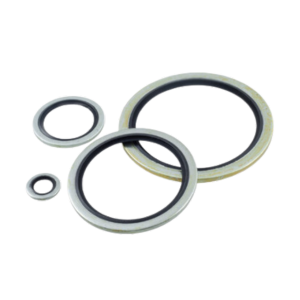
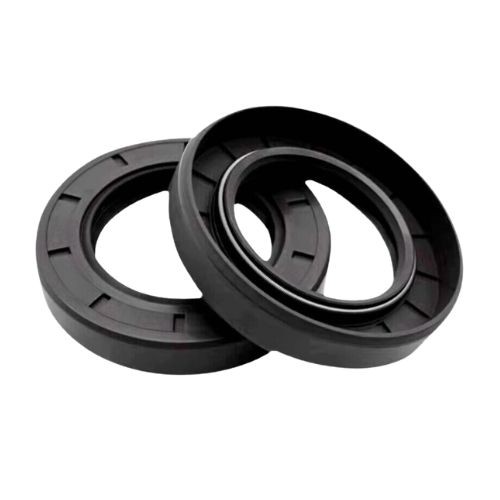
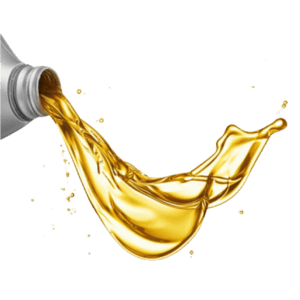
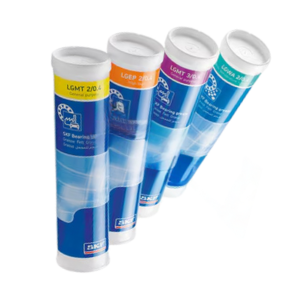
Seals and shaft seals protect the system from external contamination and help keep the lubricant where it needs to be. O-rings ensure tight sealing at connection points. Lubrication solutions determine whether the bearing operates smoothly and whether it is properly protected from friction and overheating. Assembly design, load distribution, installation accuracy, and environmental conditions also play a major role.
If even one part of this chain does not perform as it should, the whole system begins to lose stability. In that situation, bearing failure is usually not the cause — it is the first clear symptom.
Reliability starts with the system, not the part
This is the key difference between a short-term repair and a long-term solution. The real question is not simply, “Which bearing is the best?” A more important question is whether the entire system is properly prepared for that bearing and for the actual operating conditions.
Reliability is not determined by product quality alone. It also depends on how well the system components are matched and how suitable the operating conditions are. Even a high-quality bearing will not perform reliably if the surrounding conditions are wrong.
That is why Hidrobalt’s approach is based not on selecting a single component in isolation, but on evaluating the system as a whole. Only then is it possible to identify the real cause of failure and provide a solution that works not just temporarily, but in the long term.
What should actually be assessed?
When dealing with this type of issue, it is essential to look beyond the failed part itself. Loads and load distribution, operating mode, lubrication quality and supply, sealing integrity, and environmental impact all need to be assessed. Only this broader perspective can explain why a component wore out earlier than expected and what needs to change to prevent the failure from happening again.
This is how Hidrobalt specialists work with customers — not by looking for the fastest replacement, but by identifying what in the system is creating the conditions for failure.
Why does this matter for business?
From a technical standpoint, a bearing failure may seem like an isolated issue. From a business perspective, however, it often means much more: unplanned downtime, higher maintenance costs, process instability, and a greater risk to production continuity.
That is why the goal should not simply be to replace the failed component. The real objective is to ensure that the entire system operates reliably, predictably, and consistently. Over time, that approach reduces overall operating costs and improves equipment performance.
The Hidrobalt approach
Hidrobalt does more than supply components. The real value lies in helping customers understand the true cause of failure and choose solutions that match actual operating conditions. Every case is assessed individually, taking into account technical requirements, operating demands, and environmental factors.
This approach makes it possible not only to solve the current issue, but also to prevent similar failures in the future. In industrial environments, that is often more valuable than the repair itself.
What should be considered when a bearing fails?
When a bearing fails, it is worth pausing and asking one essential question: did the bearing itself fail, or was it simply the first component to reveal a deeper system issue?
In many cases, the answer lies not in a single part, but in the condition of the system as a whole. That is why reliability begins not with one component, but with a properly evaluated and correctly matched assembly.
If failures keep recurring in your equipment, it is worth assessing not only the bearing, but the entire system. The Hidrobalt team helps identify the real cause and select a solution tailored to actual operating conditions.